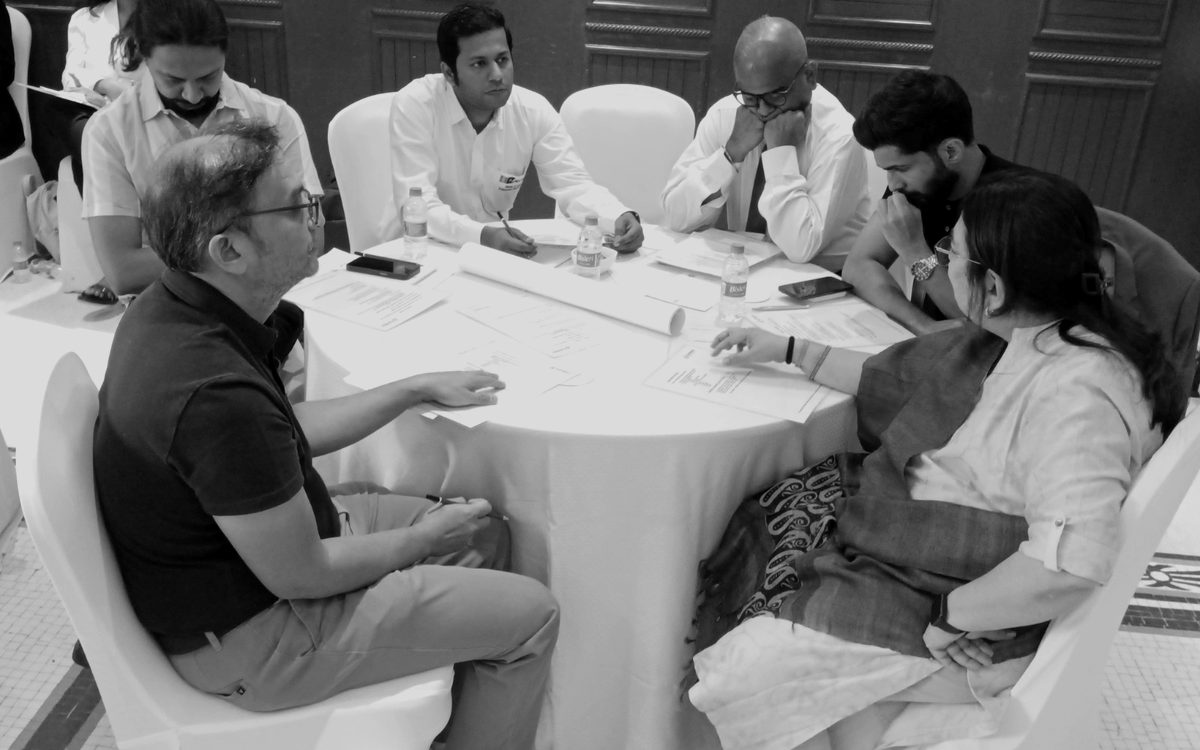
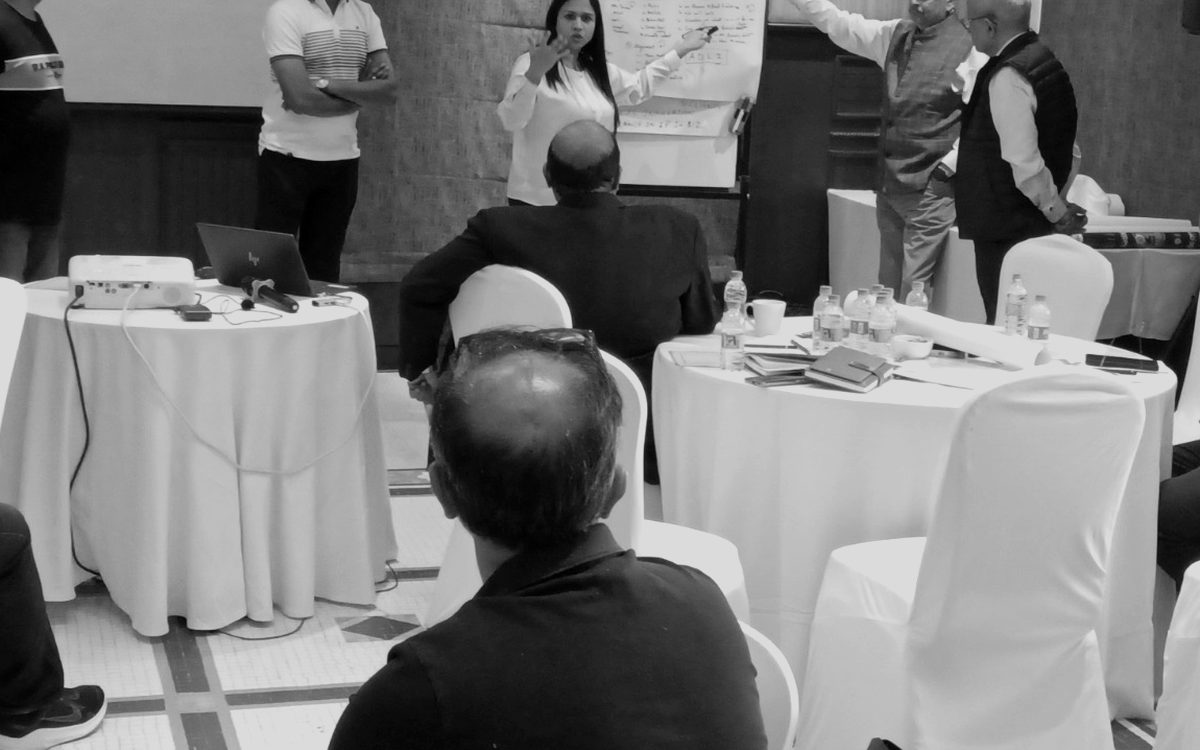
One day, one room, your own business on the table. Most companies already own more intellectual property than they can name — and lose it quietly, long before a lawyer is ever called. This session finds it, prices it, protects it, and sends you home with a plan for the next ninety days.
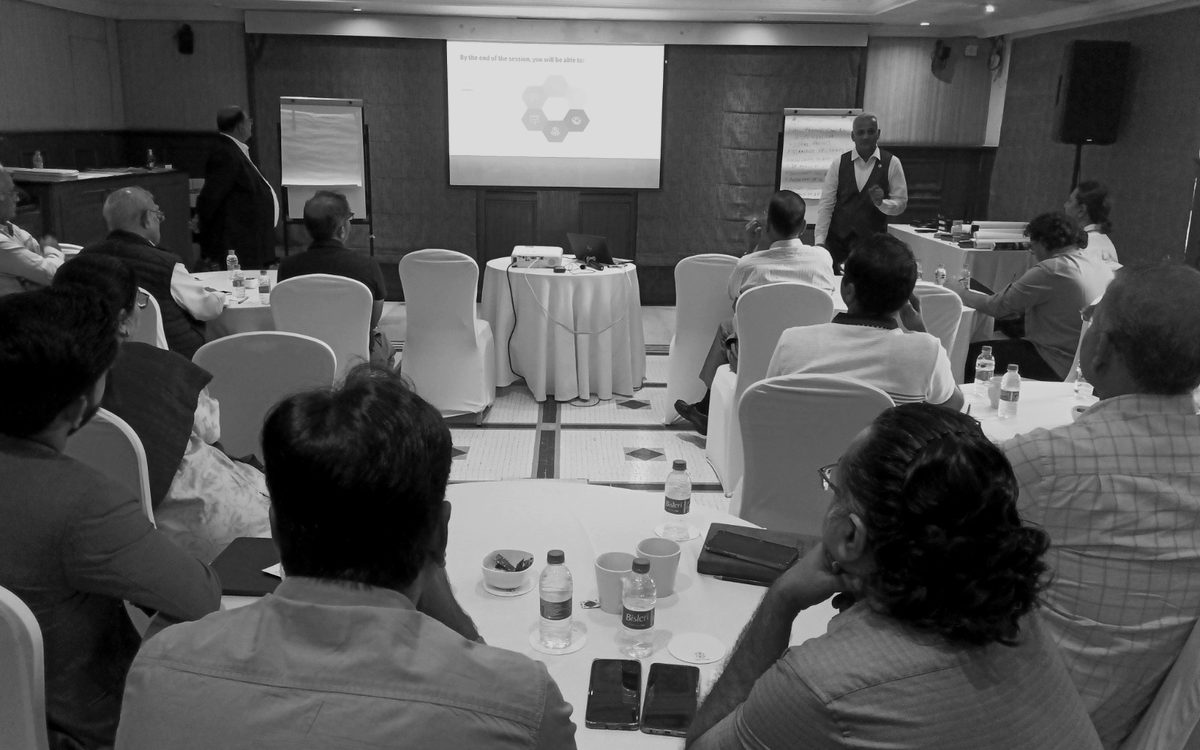
Not seven things you have heard about. Seven things you can do on Monday morning, on your own business, without calling anyone.
Name the intellectual property your business already holds — including the kinds that never appear on a certificate.
Point at where the business is open to imitation today, and say which of those openings actually costs you money.
Understand how protection works without litigation — through design, contracts, sequencing and structure.
Sort your assets into what drives revenue, what enables scale, and what is simply hygiene. Not all IP deserves the same money.
Design realistic pathways from a right you hold to a line of income — licensing, pricing power, partnership leverage.
Run a business-oriented IP audit — a strategic review of intangibles, not a legal checklist.
Walk out with a 90-day plan you wrote yourself, in the room, against your own assets.
IP only creates value when it is deliberately created, consciously protected, and strategically leveraged. Miss any one of the three and the value stays invisible.
Without a research budget. From the assets you already own, the problems your customers already face, and the systems you already operate every day without calling them intellectual property.
No huge R&D costValue beyond the law. Registration is one layer; entry barriers, switching costs, and behavioural and ecosystem advantages are the layers that hold when the certificate alone would not.
Beyond registrationConvert rights into revenue, negotiation power, valuation uplift and strategic flexibility — the four things a protected asset is actually for.
Rights to revenueMarket value has come loose from physical assets. Advantage is short-lived unless it is structurally protected. Pricing power comes from trust, not features. Yet most organisations still treat IP as a legal afterthought — and monetise value accidentally rather than deliberately.
Brand trust drives repeat purchase, patents open licensing revenue, and design and experience decide adoption.
Brands command a premium, patents keep competitors out of the lane, and certifications carry trust you would otherwise buy with discounts.
Process and systems IP compounds efficiency — the least glamorous category, and often the largest one hiding on the balance sheet.
The session ends with a plan, not a summary. Three thirty-day blocks, written against your own assets.
Run the IP audit. Identify your top assets and assign an owner to each one. The question that runs this block: if one of these disappeared tomorrow, which would hurt the most?
Audit · ownershipPrioritise the assets and fix the protection gaps — in that order, because protecting everything equally is the same as protecting nothing. The question: are you protecting value, or just documents?
Prioritise · protectSelect the leverage paths and put them to work in pricing and negotiation. The question: how does IP change the way you price, partner, or walk away?
Leverage · pricingDay one of that plan is an IP audit. Most businesses run the first pass themselves after the session — some ask us to run it properly.
See the IP Position Audit Try the free self-audit
Takes the session through identification, protection and the audit — the working half, run on the businesses actually sitting in the room rather than on textbook case studies.
Takes the strategy and value half — why the market rewards protected intangibles, how valuation changes a negotiation, and where a business should refuse to spend.
Sessions are run jointly. The room is kept small enough that every business gets its own assets discussed by name.
Cohorts 02 and 03 are placeholders — dates, venues and titles are to be confirmed before this page is published.
The same material, run two ways. The open cohort suits a founder who wants the frameworks and the company of other businesses working through them. The in-house session suits a team that needs the frameworks applied to its own products and contracts, with a written policy at the end.
A day with founders and owners from other businesses, each working their own assets through the frameworks. You leave with your own 90-day plan and a room full of people who now understand what you are protecting.
The same session run on your material rather than generic case studies — your products, your contracts, your last three launches. Teams leave able to recognise the moments that create or destroy rights.
IP includes systems, processes and behaviour — the things a business runs on daily and never registers. Consequence of the myth: most of your value stays invisible, so it is never priced, never protected and never sold.
Smaller companies need it more, because they have fewer other defences. Consequence: commoditisation — you end up competing on price against people copying what you built.
Protection begins at the design stage. Consequence: someone else captures the value of a decision you made first, and the paperwork afterwards cannot undo a public disclosure.
Valuation is for decision-making — pricing, negotiation, where to spend next. Consequence: under-pricing and weak negotiating positions, held for years without noticing.
IP is cross-functional — it is created in product, sold by marketing, given away in sales calls. Consequence: a fragmented strategy. If IP is everyone's responsibility but nobody's agenda, it fails.