The challenge: a room where nobody agreed what IP was
- Attendees arrived from unrelated sectors, with no shared baseline — some had registrations, some had never filed anything.
- Most equated intellectual property with patents and trademarks alone, leaving processes, data, contracts and market position entirely unexamined.
- Generic IP training tends to end in awareness without a next action — knowledge that decays before Monday.
- A single day is not enough time to teach law; it is only enough time to change how a business owner sees their own balance sheet.
What Platinova delivered
A working session, not a lecture
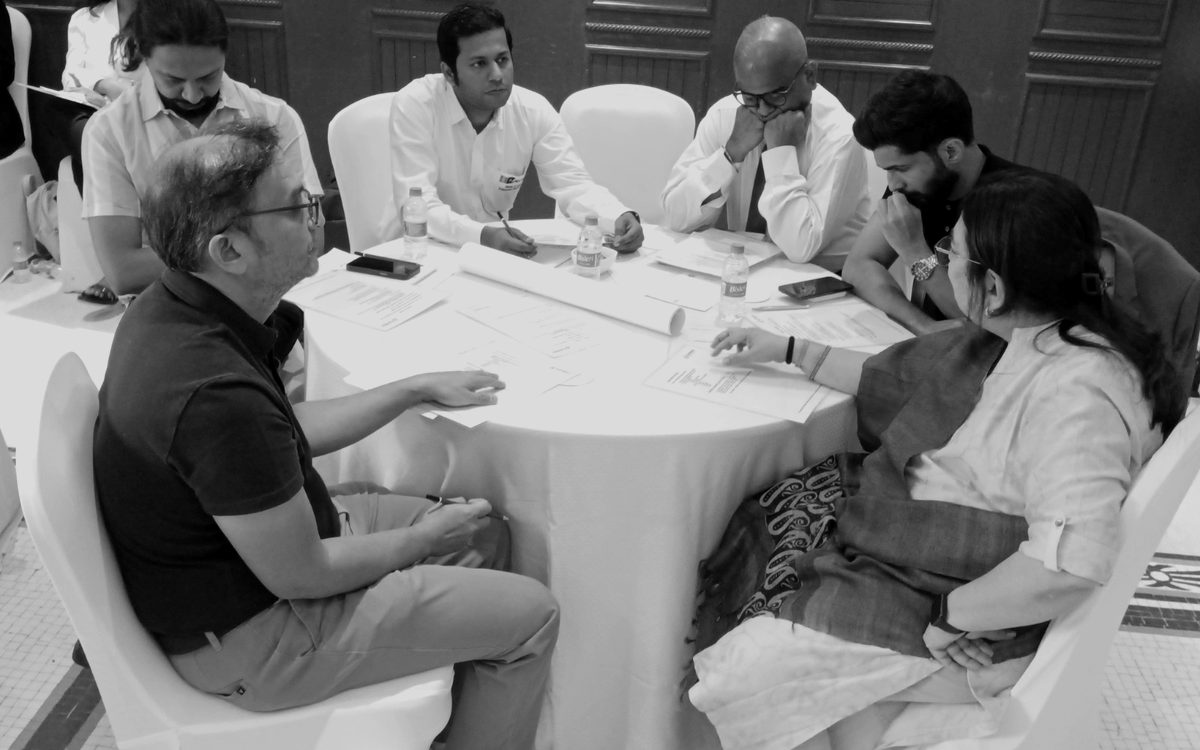
Both founders ran the room jointly — Nayan Rawal on identification, protection and audit, Shanker Viswanath on value, valuation and negotiation. Tables were seated so that each business had its own assets discussed by name.
A shared vocabulary in the first hour
Statutory IP was covered quickly and then deliberately widened: processes and systems, customer relationships, data and insight, brand trust, business models. The room stopped arguing about definitions and started listing assets.
The Create · Protect · Leverage framework
Create from assets and systems already owned, without an R&D budget. Protect through entry barriers, switching costs and ecosystem advantage as well as registration. Leverage into revenue, negotiation power, valuation uplift and strategic flexibility.
A self-run IP audit at the table
Each business worked its own six buckets — brand, product and design, processes, data, contracts, market position — and sorted the results into core, support and hygiene. This is where the room went quiet.
A 90-day plan written before anyone left
Days 1–30: audit and assign ownership. Days 31–60: prioritise and close protection gaps. Days 61–90: select leverage paths and apply them to pricing and negotiation. Written by the owner, in the room, against real assets.
Key outcomes
Every business in the room left with a written 90-day IP action plan built on its own assets.
Owners could name intangibles they had never counted — process, data, contracts, market position.
Assets were sorted into core, support and hygiene, so spending could stop being spread evenly.
Five value-destroying myths were retired on the day, each tied to the business consequence it causes.
The capability behind the room
IP audit, valuation and strategy — the working half of the practice
The workshop is a compressed version of what Platinova does at engagement depth: an audit that makes invisible assets visible, a valuation method chosen for the decision at hand, and a protection plan that treats registration as one layer among several. The session teaches the frameworks; the engagements apply them with the registers, the paperwork and the numbers checked.
Positive outcome for the room
Attendees who arrived describing IP as "the trademark we filed once" left able to point at six categories of asset in their own business and say which one would hurt most to lose.
The day ended not with a summary but with a commitment: a dated, owned, three-block plan that turns a workshop into ninety days of work.