
Ideasto Impact
© Most IP sits on the balance sheet costing renewal fees. We build portfolios that earn — licences, royalties, deals, and defensible pricing power.
© Most IP sits on the balance sheet costing renewal fees. We build portfolios that earn — licences, royalties, deals, and defensible pricing power.


Ten service lines under one roof — from first search to final renewal. No hand-offs, no juniors: the practitioner who files your rights is the one who defends them.







Most businesses buy IP one filing at a time, and the certificates go in a drawer. We work the other way: one firm, the whole life of the asset, every rupee pointed at a rupee it earns back.
A strong IP position accelerates everything around it — diligence gets shorter, investors get answers, copycats get second thoughts. We are not filing forms. We are building an advantage that compounds every year you hold it.
Trademark classes we file across — and the judgment call of which ones actually matter for your business.
The protection a granted patent can hold — managed end-to-end, from first filing to final renewal.
Free self-serve tools on this site — check your position before you spend a rupee with us.
Fixed-scope engagements for a single filing or audit, retainers for ongoing protection. Scale up or down as your business evolves — same firm at every rung.
Four rungs, one firm. Most practices sell you the middle two. The value compounds when the same people who searched the register before you spent are the ones deciding, years later, what is still worth renewing.
Our process cuts the usual back-and-forth without cutting corners — filings drafted to survive scrutiny, not just to get a receipt number.
Fixed-scope engagements for a single filing or audit, retainers for ongoing protection. Scale up or down as your business evolves — same firm at every rung.
Six free tools, no sign-up, nothing gated. They are built to orient you, not to advise you — bring the result to a call when a real decision depends on it.



IP is not one purchase, it is four stages. Most firms sell you the second one and leave you to work out the rest. This ladder is how we deliver our Create, Protect & Leverage™ approach.
Landscaping and the IP Position Audit. Find out what is already out there, and what you currently own versus what you only think you own.
Prospecting and filings. We find what is worth owning, then file trademarks, designs, patents and copyright in the right order, so the things that carry your value are actually yours.
Portfolio strategy, commercialization and licensing. Turn a filing cabinet into revenue, leverage in a raise, or a franchise you can sell.
Protection, enforcement and renewals. Watch for copycats, act when it matters, and never lose a registration to a missed date.
You do not need to know the vocabulary. Find the line that sounds like your week.
Due diligenceRaising funds?IP Position Audit LookalikesCopycat problem?Protection & Enforcement Go to marketLaunching a brand?IP Prospecting ExpansionFranchising or licensing?IP Commercialization & Licensing In-house capabilityTeam needs IP literacy?Workshops & Training

Every engagement starts as a defined piece of work with a number attached before it begins. No hourly meter, no open-ended retainer.
One document · three weeks · no retainer
For a brand, a product or an invention going to market
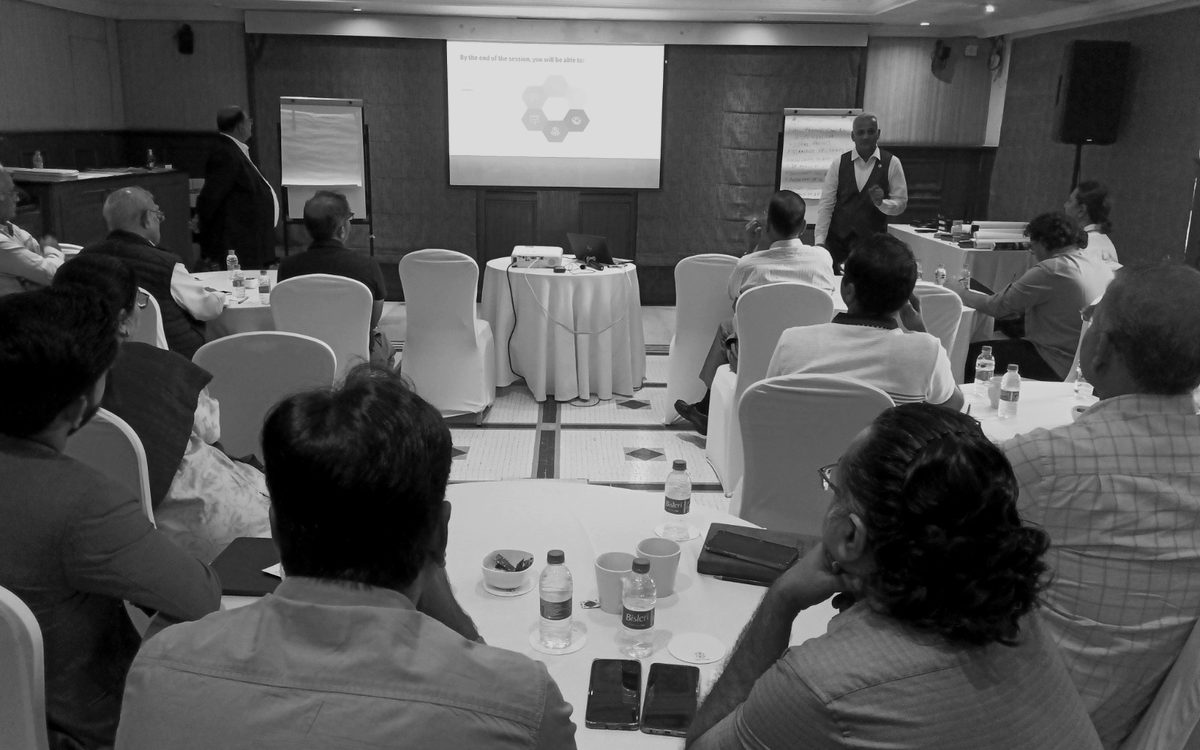
A one-day open cohort in Mumbai, or in-house with your team
Valuation, filings, policy, and the quiet mechanics of IP power — written by the practitioner who does the work, first published on LinkedIn.
Streaming, sync placements and AI training sets have turned copyright into a living revenue engine. The valuation methods have had to follow.
Why patent valuation belongs on the board agenda — and the five things it unlocks once it gets there.
SaaS platforms, marketplaces and AI tools cannot be measured with the frameworks built for factories. Here is what the IP-led models look at instead.
It is a structured review of everything your business owns or could own — brands, products, designs, drawings, code, content, processes — set against what you have actually registered. You get one document that says what is protected, what is exposed, and what to do about each gap, in priority order. It takes about three weeks and it is written for a business owner, not for a courtroom.
Hourly billing makes the cost of asking a question unpredictable, so most owners stop asking — which is the opposite of what IP advice is for. We scope the work first, quote one number, and carry the overrun ourselves. If the scope genuinely changes, we tell you and requote before doing anything further.
A trademark protects the name, logo and identity your customers recognise you by. A patent protects a technical invention — how something actually works — and it depends on that invention being new on the day you file. Most businesses need trademarks first and only some need patents at all, which is precisely the kind of question a discovery call settles in a few minutes.
Fifteen minutes, no obligation, no pitch deck. You describe the situation, we tell you which service line fits, what it involves, and what it costs as a fixed fee. If nothing we offer is the right answer for you, we will say so on the call.
No. Your advocate or patent agent handles the legal instrument — the drafting, the prosecution, the litigation — and we work alongside them on the business side of the same asset: what is worth owning, what it is worth, and what to do with it. Most clients keep their existing counsel and bring us in for the decisions that sit above the paperwork.
No obligation and no pitch. Tell us what you are trying to protect, and you leave the call knowing which service line fits, what it involves, and what it costs.